

日本化学機械製造株式会社は、化学機器を自社工場にて製造できるプラントエンジニアリング企業です。
自社工場は、高圧ガス設備、圧力容器、また特殊材(耐食材料)の製作も可能で、材料手配から納入まで一括管理を行っています。プラントは様々な装置、機器類の組み合わせで構成されており、エンジニアリングには多くの知識と経験が必要とされます。
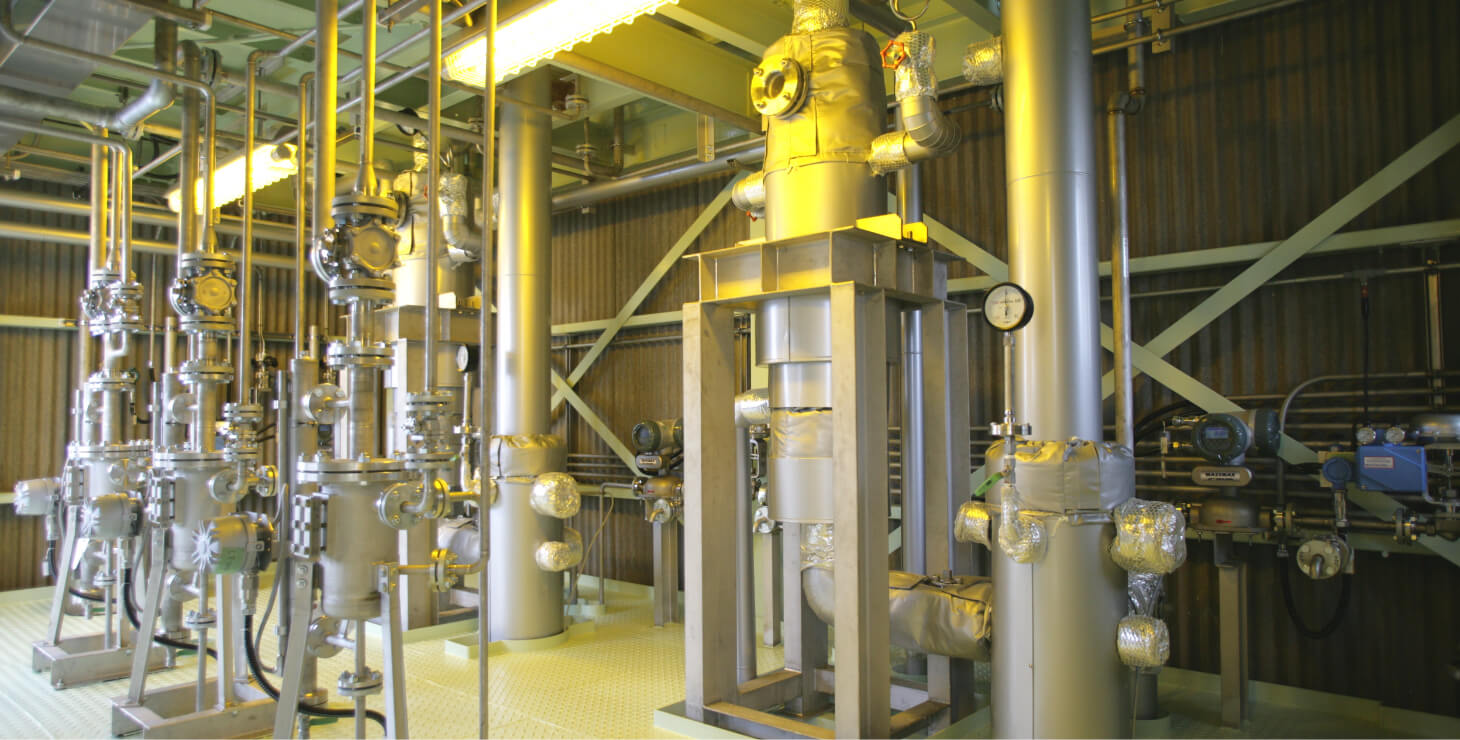
また、時代背景?外部環境の変化に伴いプラントに対するお客様のニーズも多種多様に変化しています。 設備の抱える様々な問題の解決、省エネルギー、環境対策、生産効率、品質向上、新製品生産のプロセス構築?設備計画の具現化によりお客様の事業価値向上の一助となるべく、最新の技術の開発、活用に努めております。 常にお客様の立場になり、安全で効率的な設備の構築を念頭に取り組んでおります。
-
THREE:In Wales, such was the neglect of religion by the Establishment, that, previous to 1804, there was scarcely a clergyman of the Church of England in the principality who was a native, or could preach in Welsh. The capability of a minister to make himself understood by his parishioners had been totally disregarded by those who had the presentation to livings; the exercise of patronage had alone been cared for; the souls of people went for nothing. About that time the Rev. Mr. Charles was engaged as curate in a Welsh parish. He found not a single Bible in the parish, and on extending his inquiries he scarcely found a Bible in Wales. He made this fact known to the public, in an appeal for Welsh Bibles, and for this appeal and the attendant exposure of the clerical neglect he was dismissed from his cure, and could find no bishop who would license him to preach in any other parish. But his truly Christian act had excited the attention of the religious public, and had the effect of establishing the British and Foreign Bible Society in 1804.
経験と実績をもとに、お客様のニーズに応じた最適な仕様?システムを構築、ご提案いたします。
-
THREE:
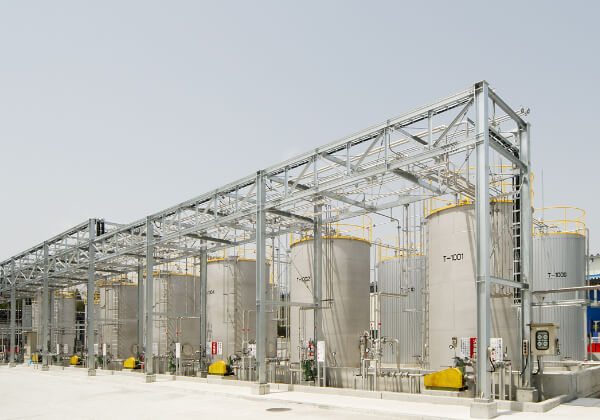
工場建屋、事務所棟、倉庫、試験棟などの建設も一括してご依頼いただけます。
-
THREE:[See larger version]
環境に配慮し、コストメリットを勘案した、省エネルギーで、省スペースな設備をご提案いたします。
-
THREE:
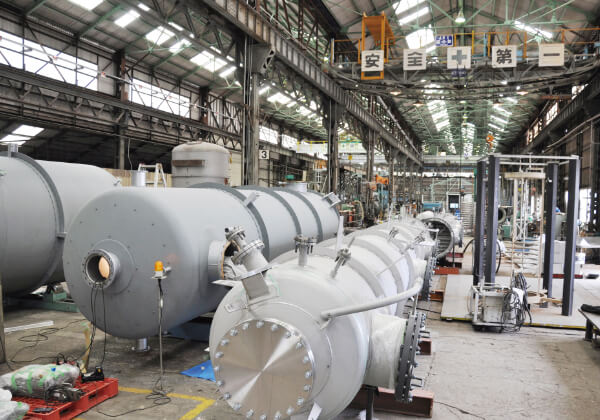
高圧ガス設備、圧力容器の製造資格を持った自社工場での製作により、品質、納期を管理しております。
-
THREE:But whatever may have been the prudence of the chiefs of the party in Britain, however quietly the suppression may have been effected on the English side of St. George's Channel, the society was very far from dying quietly, or dying at all in Ireland, its native land. It was stunned for the moment, but very soon recovered all its pristine vigour and became as troublesome as ever. Lord Mulgrave went to that country as Viceroy, determined to govern on the principle of strict impartiality between sects and parties, but the Orangemen and the Tories generally denounced him as the most partial and one-sided of Viceroys. It was enough for them that O'Connell declared him to be the best Englishman that ever came to Ireland. Eulogy from his lips was the strongest possible censure in the estimation of the opposite party. The violence of party feeling against the Government may be inferred from the fact that the Recorder of Dublin, Mr. Shaw, one of the ablest and most eloquent of the Protestant chiefs, denounced the Melbourne Administration as infidels in religion. Lord Mulgrave, imitating some of the Viceroys of old times, made a "progress" of conciliation through the country, first visiting the south and then the north. This progress was signalised by the pardon and liberation of a large number of prisoners, which produced much excitement and clamour against the Government. It subsequently appeared that he had during his viceroyalty liberated 822 prisoners, of whom 388 were liberated without advice, the number of memorials which he received being 1,631. Although he evinced his impartiality by setting free all the Orangemen who had been imprisoned in Ulster for taking part in processions on the previous 12th of July, the members of that[396] body were not conciliated. The Dublin Grand Committee published a manifesto, declaring that the mere will of the king was not law, and that their watchword should still be "No Surrender." Sir Harcourt Lees, who had been long famous as an Orange agitator, issuing counter-blasts to O'Connell's letters and speeches, concluded one of his appeals on this occasion thus:¡ª"Orangemen, increase and multiply; be tranquil, be vigilant. Put your trust in God, still revere your king, and keep your powder dry." In Ulster the organs of the Orange party called upon its members to resist the law against processions, since the provisions of the Emancipation Act against the Jesuits and other religious orders, who treated the law with defiance, were allowed to remain a dead letter. The Londonderry Sentinel warned off the Liberal Viceroy from that citadel of Protestant ascendency, and said, "If he should come among us, he shall see such a display of Orange banners as will put him into the horrors." The irritation was kept up by various incidents, such as setting aside the election of a mayor of Cork, because he was an Orangeman, setting aside two sheriffs, and the dismissal of constables for the same reason. In the meantime a tremendous outcry was raised on account of the alleged partiality of the Irish Government on the subject of patronage. It was said that every office was at the disposal of the Roman Catholics; that from the bench of justice down to the office of police-constable there was no chance for any one else. In the midst of a war of factions in the spring of 1836 a tremendous sensation was produced by the blowing up of the statue of King William on College Green. On the 8th of February, a little after midnight, this astounding event occurred. The statue stood on a pedestal eighteen feet in height, surrounded by an enclosure of iron railing, the head being about thirty feet from the level of the street. The figure consisted of lead, and though weighing several tons, it was blown up to a considerable height, and fell at some distance from the pedestal. The Government and the corporation offered rewards for the discovery of the authors of this outrage, but without success. It was a mystery how such a quantity of gunpowder could have been got into the statue, and how a train could have been laid without detection in so public a place, the police being always on duty on College Green at night. King William, however, was restored to his position.
コストを積算し、見積価格をご提示します。回収期間法などの設備投資の経済性計算をお客様とご一緒にシミュレーションすることも可能です。
-
THREE:Owing to these circumstances, occasion was taken, on the presentation to the Privy Council of the petition of the people of Boston for the removal of the Governor and Lieutenant-Governor of Massachusetts, to animadvert on Franklin's conduct. This took place on the 29th of January, 1774, when Dunning and Lee were retained on the part of the petition, and Wedderburn, the Solicitor-General, appeared for the Crown. There were no less than thirty-five Privy Councillors present, amongst them Lord North, and Lord Gower at their head, as Lord President. Neither Dunning nor Lee spoke effectively, but as if they by no means relished the cause in which they were engaged; while Wedderburn seemed animated by extraordinary life and bitterness. He was the friend of Whately, who was now lying in a dangerous state from his wound. After speaking of the Charter and the insubordinate temper of the people of Massachusetts, he fell with withering sarcasm on Franklin, who was present. Hitherto, he said, private correspondence had been held sacred, even in times of the most rancorous party fury. But here was a gentleman who had a high rank amongst philosophers, and should be the last to sanction such infamous breaches of honour, openly avowing his concern in them. He asked where, henceforth, Dr. Franklin could show his face; and said that henceforth he must deem it a libel to be termed "a man of letters," he was "a man of three letters, f u r, a thief." Wedderburn could compare him only to Zanga, in Dr. Young's "Revenge:"¡ªAmongst the most distinguished persons captured were Lords Kilmarnock, Cromarty, Balmerino, Mordington, and Lovat. Cromarty, Balmerino, and Kilmarnock were brought to trial before the peers in Westminster Hall on the 28th of July. "Cromarty," says Horace Walpole, "was a timid man, and shed tears; and Kilmarnock, though behaving with more dignity, pleaded guilty, both expressing remorse for their past conduct, and their fervent good wishes for the person and government of the king." But old Balmerino, the hero of the party, pleaded not guilty, and took exceptions to the indictment. "He is," writes Walpole, "the most natural, brave old fellow I ever saw; the highest intrepidity, even to indifference." All these noblemen were pronounced guilty. Cromarty pleaded piteously the condition of his wife and family: that he left his wife enceinte, and eight innocent children to suffer for his fault. His wife's entreaties and the interest of the Prince of Wales saved him; Kilmarnock and Balmerino were beheaded.
化学工場への納入実績が多く、各種法規にも精通しています。官庁申請書類の作成もサポートいたします。
-
THREE:While thus tottering on the verge of revolution the Orleanist monarchy had the misfortune to affront the British Court. The reason of the rupture is known to history as the affair of the Spanish marriages, of which it is enough to say here that Louis Philippe succeeded in marrying the young Queen of Spain to her cousin, the Duke of Cadiz, who was imbecile, while at the same time he secured the hand of her sister for his youngest son, the Duc de Montpensier. Thus he apparently acquired the reversion of the throne for his family, but the coup was effected in defiance of pledges made repeatedly to Lord Aberdeen and continued to his successor at the Foreign Office, Lord Palmerston. It was undoubtedly the advent of the latter to power which hurried on the conclusion of the intrigue. Louis Philippe and Guizot suspected him of trying to secure the hand of the Queen of Spain for a prince of the House of Coburg, and was justified to a certain extent by an imprudent despatch sent by the English Foreign Secretary to our Minister at Madrid. Thereupon the King of the French frightened the Queen-Mother of Spain into giving her consent to the marriages, which were celebrated simultaneously on the 10th of October, 1846. The calculating cunning displayed by Louis Philippe and the deliberate sacrifice of a young girl to sordid requirements of State aroused a feeling of universal disgust. From Queen Victoria the proceedings provoked a letter to Louis Philippe's queen, which[549] concluded with the scathing remark¡ª"I am glad that I can say for myself that I have always been sincere with you." It was in fact, as her Foreign Minister wrote to his brother, "a twister."
社内に様々なテスト装置をそろえておりますので、事前の検証も可能です。
新製品の生産プロセスの構築もご相談ください。
プラントの計画時から、設計、調達、建設、試運転、更には完成後のメンテナンスに至るまでトータルに対応いたします。当社は機器製作工場を所有しておりますので、細やかな機器設計?製作が可能です。
-
 FORE:Exasperated at the failure of this measure, a furious mob broke into the Irish House of Commons on the 15th of April, but they were soon quelled, and two of the ringleaders seized. The magistrates of Dublin were censured for observing the gathering of the mob and taking no measures to prevent its outbreak. The printer and supposed publisher of the Volunteers' Journal were called before the House and reprimanded, and a Bill was brought in and passed, to render publishers more amenable to the law. The spirit of violence still raged through the country. Tumultuous associations were formed under the name of Aggregate Bodies.CHAPTER XVII. REIGN OF GEORGE III. (continued).
工場建設、プラント新設の計画の立案には、大きな労力を要します。当社では、お客様の一助となるべく、官庁届け出の助成を行いながら、工場建設を進め、抱えておられる問題の解決に取り組んでおります。
-
 FORE:Now followed a period in which many works were produced which were extremely popular in their day, but of which few now retain public appreciation. Amongst these none reached the same estimation as "Henry, Earl of Moreland: or, The Fool of Quality," by Henry Brooke. It was designed to show the folly and the artificial morale of the age, by presenting Henry as the model of direct and natural sentiments, for the indulgence of which he was thought a fool by the fashionable world. The early part of the work is admirable, and the boyhood of Henry is the obvious prototype of Day's "History of Sandford and Merton;" but as it advances it becomes utterly extravagant. Miss Frances Brooke, too, was the author of "Julia Mandeville" and other novels. Mrs. Charlotte Smith, long remembered for her harmonious sonnets, was the author of numerous novels, as "The Old Manor House," "Celestina," "Marchmont," etc.; there were also Mrs. Hannah More[175] with her "C?lebs in Search of a Wife;" Mrs. Hamilton with her "Agrippina;" Bage with his "Hermstrong: or, Man as he is Not;" "Monk" Lewis with his "Tales of Wonder" and his "Monk;" and Horace Walpole with his melodramatic romance of "The Castle of Otranto." But far beyond Walpole rose Mrs. Ann Radcliffe, the very queen of horror and wonder, in her strange, exciting tales of "The Sicilian Romance," "The Romance of the Forest," "The Mysteries of Udolpho," "The Italian," etc. No writer ever carried the powers of mystery, wonder, and suspense, to the same height, or so bewitched her age by them.
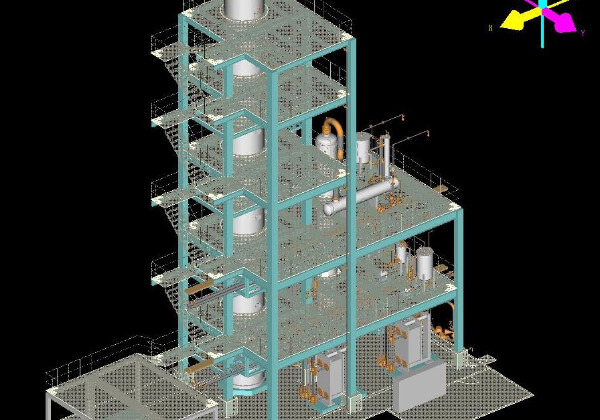
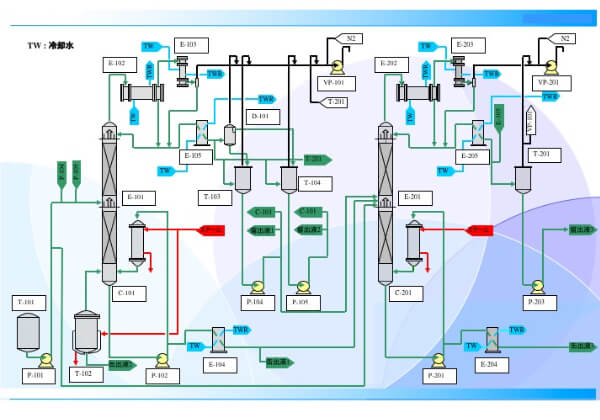
主要機器等の仕様を決定し、プラントの基本フローや配置を決定します。
-
 FORE:At the end of the fortnight Lord Grenville and Lord Grey pointed out the necessity of proceeding to appoint a regent. Ministers replied that the[9] physicians were confident of the king's speedy recovery; but as there were repeated adjournments and the reports of the physicians still held the same language, the sense of Parliament prevailed. On the 17th of December Mr. Perceval moved that on the 20th they should go into committee on the question of the Regency; and on that day the same resolutions were passed as had been passed in 1788¡ªnamely, that the Prince of Wales should be Regent under certain restrictions; that the right of creating peerages, and granting salaries, pensions, and offices in reversion, should be limited specifically, as in 1788. The royal dukes made a protest against these limitations; but on the 30th they were confirmed by both Houses, with additional resolutions for the care of his Majesty's person and the security of his private property, which were passed on the last day of the year 1810.A debate which took place shortly afterwards was characterised by a memorable scene. In the month of January, 1843, Mr. Edward Drummond, the private secretary of Sir Robert Peel, had been shot in the street at Charing Cross, by an assassin, named M'Naughten. The unfortunate gentleman died of the wound, and the wildest rumours agitated the town as to the motive which had prompted the deed. Many asserted that it was a political one. M'Naughten had been seen loitering in Whitehall Gardens, and had followed his victim from Sir Robert Peel's residence in that locality. It was at once rumoured that the Prime Minister was the intended victim. M'Naughten had come from Glasgow, and it was said that when the Queen was in Scotland Sir Robert Peel invariably rode in the royal carriage, and Mr. Drummond in Sir Robert's own carriage. If this were true, it was remarked, the assassin's confidence would have been complete when he saw Mr. Drummond actually leave the house of Sir Robert Peel. Although the assassin was afterwards proved to be insane, the fact, coupled with the political excitement of the time, made a painful impression upon the minds of public men.
設備の構成要素の詳細な仕様や配置を決定し、図面を作成します。
-
 FORE:"No words," says Sir Archibald Alison, "can convey an adequate idea of the astonishment which the announcement of this project of Reform created in the House of Commons and the country. Nothing approaching to it had ever been witnessed before, or has been since. Men's minds were prepared for a change, perhaps a very considerable one, especially in the enfranchising of new cities and towns which were unrepresented; but it never entered into the imagination of any human being out of the Cabinet that so sweeping and entire a change would be proposed, especially by the king's Ministers. The Tories had never dreaded such a revolution; the Radicals had never hoped for it. Astonishment was the universal feeling. Many laughed outright; none thought the Bill could pass. It was supposed by many that Ministers neither intended nor desired it, but wished only to establish a thorn in the side of their adversaries, which should prevent them from holding power if they succeeded in displacing them. So universal was this feeling, that it is now generally admitted that had Sir Robert Peel, instead of permitting the debate to go on, instantly divided the House, on the plea that the proposed measure was too revolutionary to be for a moment entertained, leave to bring in the Bill would have been refused by a large majority. The Cabinet Ministers themselves are known to have thought at the time that their official existence then hung upon a thread." Such a result, however, was most unlikely, as Sir Robert Inglis and other Tory orators were eager to speak, having collected precedents, arguments, and quotations against the Bill. These they proceeded to impart to the House. After a debate of seven nights, the Bill was read a first time, without a division, and the second reading was set down for the 21st of March.This action was the height of imprudence. The true wisdom would have been to have taken no notice of such a discussion by an obscure association. On the 13th of March Sir Francis Burdett moved that Mr. John Gale Jones should be discharged, questioning the legality of his commitment, and declaring that, if the proceedings of Parliament were not to be criticised like everything else, there was an end of liberty of speech and of the press. This motion was rejected by one hundred and fifty-three against fourteen. The speech of Sir Francis was printed by Cobbett in his Weekly Register, a publication possessing high influence with the people. It was also accompanied by a letter of Sir Francis, commenting in strong language upon this arbitrary act, and[596] questioning the right of such a House to commit for breach of privilege, seeing that it consisted of "a part of our fellow-subjects, collected together by means which it is not necessary to describe."
詳細設計に基づきポンプや部品類の購入品の調達先を選定し、発注します。
プラントを構成する主要な機器は特注製作が多く、材料発注、製作、各種検査、運搬まで工程、納期を管理します。 -
 FORE:[See larger version]
安全を第一に、管理技術者が責任を持って施工、工程、品質の管理を行いながら協力会社と連携し進めていきます。
土木?建築、機器据付、配管、電気?計装、断熱などの工事があります。 -
 FORE:[45]When such acts as the burning of the Gaspee had been done with impunity, and whilst the American mind was rankling with the Franklin poison of the purloined letters, three vessels arrived at Boston, laden with tea, under the conditions of Lord North's Bill. On the arrival of the ships the commotion was intense. The captains themselves would gladly have sailed away with their obnoxious cargoes in safety, but the governor very foolishly gave orders that they should not pass the ports without a permit from himself, and he sent Admiral Montague to guard the passages out of the harbour with two ships of war. As the evening grew dark, those who had quitted the meeting held on the 16th of December to demand that the ships should be sent home again, were met by mobs of men arrayed as wild Indians, who hurried down to Griffin's Wharf, where the tea ships lay. Rushing tumultuously on board, and hoisting out the tea chests, they emptied them into the sea amid much cheering and noise. Having thus destroyed teas to the amount of eighteen thousand pounds, the triumphant mob retreated to their houses.
プラント完成後、性能が出るか試運転を行って確認、調整を行います。
きめ細やかな運転指導により実運転へのスムースな移行を促します。完成図書と共にお引渡しとなります。
運転?保守フェーズ
-
 FORE:Sir John Malcolm and Captain Grant pursued the fugitives along the banks of the Seepra, killing numbers, and seizing immense booty, including elephants and numerous camels. He left them no time to reassemble, but advanced rapidly on the capital of Holkar, joined by reinforcements from the Bombay army under Major-General Sir William Keir. Alarmed at this vigorous action, the Holkar Mahrattas hastily concluded peace, gave up all their forts, and placed their territories under British protection. Some Pathan chiefs attempted to resist, trusting to the defences of Rampoora; but General Brown soon stormed that place, and the whole country of the Holkar Mahrattas was reduced to obedience. No respite was granted to the Pindarrees. Cheetoo was followed from place to place by the Gujerat army under Sir William Keir, and sought refuge in vain amongst the hills and jungles of Malwa and along the Nerbudda. At length, in January, 1818, Cheetoo's last camp was surprised and cut to pieces. After seeking refuge amongst various tribes, Cheetoo was ultimately found in the jungle near the fort of Aseerghur, torn to pieces by a tiger, his horse grazing not far off, safe, and a bag on his saddle containing his remaining jewels and two hundred and fifty rupees. And thus ended the existence of the long formidable hosts of the Pindarrees.
プラント、機器の安全と安定稼働のために、定期的なメンテナンスをお薦めいたします。
-
 FORE:Such were the conditions on which this great contest was finally terminated. The Americans clearly had matters almost entirely their own way, for the English were desirous that everything should now be done to conciliate their very positive and by no means modest kinsmen, the citizens of the United States. It was, in truth, desirable to remove as much as possible the rancour of the American mind, by concessions which England could well afford, so as not to throw them wholly into the arms of France. The conditions which the Americans, on their part, conceded to the unfortunate Royalists consisted entirely of recommendations from Congress to the individual States, and when it was recollected how little regard they had paid to any engagements into which they had entered during the war¡ªwith General Burgoyne, for example¡ªthe English negotiators felt, as they consented to these articles, that, so far, they would prove a mere dead letter. They could only console themselves with the thought that they would have protected the unhappy Royalists, whom Franklin and his colleagues bitterly and vindictively continued to designate as traitors. Franklin showed, on this occasion, that he had never forgotten the just chastisement which Wedderburn had inflicted on him before the Privy Council for his concern in the purloining of the private papers of Mr. Thomas Whateley, in 1774. On that occasion, he laid aside the velvet court suit, in which he appeared before the Council, and never put it on till now, when he appeared in it at the signing of the Treaty of Independence.In one respect the general election happened at an unseasonable time. It was the driest and warmest summer on record. On the 28th of June, the hottest day in the year, the thermometer stood at eighty-nine and a half degrees in the shade. Several deaths were occasioned by sunstroke; among the victims were a son of Earl Grey, and Mr. Butterworth, the eminent law bookseller, a candidate for Dover. The elections were carried on in many places with great spirit. But, though there were exciting contests, the struggles were not for parties, but for measures. There were three great questions at issue before the nation, and with respect to these pledges were exacted. The principal were the Corn Laws, Catholic Emancipation, and the Slave Trade. In England and Wales one hundred and thirty-three members were returned who had never before sat in Parliament. This large infusion of new blood showed that the constituencies were in earnest. In Ireland the contests turned chiefly on the Catholic question. The organisation of the Catholic Association told now with tremendous effect. In every parish the populace were so excited by inflammatory harangues, delivered in the chapel on Sundays, after public worship, both[254] by priests and laymen¡ªthe altar being converted into a platform¡ªthat irresistible pressure was brought to bear upon the Roman Catholic electors. The "forty-shilling freeholders" had been multiplied to an enormous extent by the landlords for electioneering purposes. Roman Catholic candidates being out of the question, and the Tory interest predominant in Ireland, electioneering contests had been hitherto in reality less political than personal. They had been contests for pre-eminence between great rival families; consequently, farms were cut up into small holdings, because a cabin and a potato garden gave a man who was little better than a pauper an interest which he could swear was to him worth forty shillings a year. The Protestant landlords who pursued this selfish course little dreamt that the political power they thus created would be turned with terrible effect against themselves; and they could scarcely realise their position when, in county after county, they were driven from the representation, which some of them regarded as an inheritance almost as secure as their estates. The most powerful family in Ireland, and the most influential in the Government, was that of the Beresfords, whose principal estates lay in the county Waterford, and where no one would imagine that their candidate could be opposed with the least prospect of success. But on this occasion they suffered a signal defeat. The forty-shilling freeholders, as well as the better class of Roman Catholic farmers, were so excited by the contest that they went almost to a man against their landlords. In many cases they had got their holdings at low rents on the express condition that their vote should be at the disposal of the landlord. But all such obligations were given to the winds. They followed their priests from every parish to the hustings, surrounded and driven forward by a mass of non-electors armed with sticks and shouting for their church and their country. O'Connell was now in his glory, everywhere directing the storm which he had raised. When the contest was over, many of the landlords retaliated by evicting the tenants who had betrayed their trust and forfeited their pledges. They were tauntingly told that they might go for the means of living to O'Connell and the priests. This was a new ingredient in the cauldron of popular discontent, disaffection, and agrarian crime. The gain of the Catholic party in Ireland, however, was more than counterbalanced by the gain of the opposite party in England and Scotland.
生産量を減らすことなく、生産能力を増強するなど、お客様のご要望にお応えできるソリューションをご提案いたします。
お客様のプロセスノウハウと当社の固有技術の融合によって最適化、効率化、さらには環境に優しい設備を実現をいたします。海外現地法人(タイ、ベトナム)におきましても同等のエンジニアリングが提供できるように、本社の技術者と連携し管理いたしております。

※これ以外にも様々な単位操作装置、単体機器製作ができます。
| 業種?分野 | プラント?設備名称 | 構成プロセス | 付帯設備?工事施工 |
|---|---|---|---|
| ファインケミカル | IT関連化学品プラント | 反応プロセス ろ過分離プロセス 乾燥プロセス |
クリーンルーム、充填、タンクヤード、 ユーティリティ、消火?防火設備、 土木?建築、計器?計装工事、 電気工事 |
| 食品工業 | 澱粉工場 | 反応プロセス 分離プロセス 精製プロセス 脱水?乾燥プロセス |
タンクヤード、ユーティリティ、 消火?防火設備、土木?建築、 計器?計装工事、電気工事、 原料受入?貯蔵設備、計量?包装設備 |
| 化学工業 | 合成樹脂工場 > | 反応プロセス 蒸留プロセス 濾過分離プロセス 乾燥プロセス |
タンクヤード、ユーティリティ、 供給設備、充填、自動倉庫、 焼却設備、出荷設備 |
| 食品工業 | 糖化工場 > (異性化糖類製造設備) |
液化?糖化プロセス 濃縮プロセス 濾過?精製プロセス |
タンクヤード、ユーティリティ、 土木?建築、計器?計装工事、 電気工事 |
| 環境?リサイクル | 溶剤回収プラント | 濃縮?調整プロセス 蒸留プロセス |
タンクヤード、計量設備、 ユーティリティ、消火?防火設備、 計器?計装工事、電気工事、 原料受入?貯蔵?出荷設備 |
| 無機化学工業 | 触媒製造プラント (自動車用) |
調合プロセス コーティングプロセス 焼成プロセス |
ロボット搬送システム、 原料調整?供給装置 |
| 無機化学工業 | 二次電池用原料 精製プラント |
調整プロセス 反応プロセス 分離?濃縮プロセス 蒸留プロセス |
タンクヤード、ユーティリティ、 土木?建築、空調設備、集塵?局所排気、 計器?計装工事、 電気工事、貯蔵設備、計量?包装設備 |
| 新エネルギー | バイオエタノール 大型実証モデルプラント > |
蒸留プロセス 脱水プロセス |
計器?計装工事、電気工事 |
| 無機化学工業 | 水素回収設備 | 水素回収プロセス | タンクヤード、冷却システム、 計器?計装工事 |